
POSTED BY:
COMMENTS:
0
POST DATE:
For modern corporate facilities across Bangalore's major tech parks — from Ecospace and Cessna Business Park to Manyata and International Tech Park Bangalore (ITPB) — physical access control is the very first line of defense for human and digital asset security. Yet, many organizations still rely on legacy 125 kHz proximity plastic cards vulnerable to clone attacks, buddy-punching, and lost badge breaches that expose server rooms and executive suites to unauthorized entry.
Modern enterprise security requires high-speed, touchless Facial Recognition Biometric Access Control integrated with optical speed gate turnstiles, multi-door electromagnetic locks, and automated Cloud HRMS time-attendance systems.
The Security Gap in Traditional Access Control Systems
Standard 125 kHz EM proximity cards — the blue or white plastic cards issued by most Bangalore corporate offices — have a fundamental, unfixable security vulnerability: they broadcast their 26-bit code wirelessly to any reader within range. An attacker with a compact RF cloner device (available online for under ₹3,000) can silently capture an employee's card signature from 15–20 cm away in a lift lobby and clone it to a blank card in seconds.
Beyond cloning, traditional card systems suffer from:
- Buddy Punching: An employee taps a colleague's card for attendance without them being physically present — corrupting payroll data and creating false audit trails.
- No Real-Time Revocation: When an employee resigns, cards must be physically collected before access is terminated. During notice periods, disgruntled employees retain full access.
- No Visitor Intelligence: Legacy systems cannot distinguish between enrolled employees and visitor badges — allowing visitors with expired passes to re-enter unchallenged.
- Tailgating: Multiple people entering through a single card swipe — a common occurrence at peak morning rush when turnstile flow is slow.
Technology Comparison: RFID Cards vs. Fingerprint vs. Facial Recognition
| Security Parameter | Legacy RFID Smart Cards | Optical Fingerprint Scanners | AI Facial Recognition |
|---|---|---|---|
| Verification Speed | ~1.0 second (requires physical tap) | 1.5–2.5 seconds (dry/sweaty finger delays) | < 0.2 seconds (walk-through at 2.5 meters) |
| Buddy Punching Risk | High — common in many offices | Zero (requires physical presence) | Zero (live face required with 3D liveness detection) |
| Spoof Resistance | Low (easily cloned with handheld RF copier) | Moderate (latex molds spoof optical sensors) | High — infrared dual-camera rejects photos, videos & 3D masks |
| Peak-Hour Throughput | ~25 people/minute | ~15 people/minute (morning bottleneck) | 45–60 people/minute (seamless rush-hour flow) |
| Hygiene (Post-COVID) | Physical contact required | Direct skin contact — hygiene concern | 100% touchless — zero contact required |
| Mask Detection | N/A | N/A | Modern systems identify faces with or without face masks |
Multi-Tiered Corporate Access Architecture
Tier 1: Main Reception & Optical Speed Gate Turnstiles
At the building lobby entrance, install high-speed optical glass flap barrier turnstiles (Boon Edam, Gunnebo, or ASSA ABLOY) integrated with dual face-recognition access terminals positioned on both sides of each lane:
- Enrolled employees walk through naturally at 3–4 km/h without stopping or removing masks — the facial recognition terminal identifies them within 0.2 seconds and opens the flap gate.
- Visitors receive a temporary QR code (printed or on mobile) from the digital reception system — a dedicated visitor lane with QR code reader allows fast visitor entry without burdening reception staff.
- Anti-tailgating sensors detect when two bodies attempt to pass through a single gate opening and immediately close the flaps with an audible alert.
Tier 2: Internal Departmental Access (Card / Face)
Internal zones requiring controlled access — Human Resources, Executive Suites, Finance, R&D Labs — are secured with:
- Frameless glass electromagnetic locks (600 lbs holding force) with fail-safe configuration (released on power failure for emergency egress) or fail-secure (retained on power failure for server rooms).
- Compact surface-mount biometric terminals or encrypted MIFARE DESFire EV2 smart card readers at each door.
- Time-zone-based access: HR staff can only access the Finance section between 9 AM and 6 PM on weekdays — all other attempts are logged and denied automatically.
Tier 3: Server Room & Data Center (Two-Factor + Anti-Passback)
Under ISO 27001:2022 Control A.11.1 and A.7.4 (Physical Security), server rooms demand the highest security classification — requiring documented, dual-factor verification for every single entry:
- Two-Factor Authentication (2FA): Requires Biometric Facial Scan + Private PIN simultaneously. Knowledge of the PIN without a matching enrolled face (or vice versa) is rejected — eliminating shared-PIN abuse.
- Anti-Passback (APB): The access control system tracks entry/exit events. If an employee's credential was last used to enter a zone, it cannot be used to enter again without first logging an exit — preventing card passing through a secured door.
- Interlocked Mantrap/Airlock: For tier-4 data centers, a dual-door interlocked entry vestibule ensures only one person can be between the two doors simultaneously — eliminating all tailgating risk.
- Fail-Secure Integration with Fire Alarm Panel: Emergency break-glass units and building fire alarm relay contacts de-energize magnetic locks during fire evacuation — meeting NFPA 101 and NBC India fire egress requirements.
Automated HRMS Integration & Payroll Compliance
Manual Excel attendance calculations waste 15–25 HR hours per month in a 100-person organization. Modern access control platforms sync real-time timestamps via REST API with leading Indian HRMS platforms:
- Direct Cloud Sync: Darwinbox, Keka HR, Zoho People, GreytHR, SAP SuccessFactors, and Sumhr.
- Automated Shift Calculation: Late arrivals, early departures, half-days, and comp-offs calculated automatically from biometric timestamps — eliminating manual approvals for 90% of attendance cases.
- Overtime & Night Shift Detection: Multi-shift factory and BPO environments automatically tag overtime beyond 9 hours and night differential shifts.
- Leave Integration: Approved leaves from the HRMS system auto-exempt employees from late-arrival penalties — preventing HR queries for pre-approved absences.
- Statutory Compliance Reports: Automated generation of Form 20 (Factories Act attendance register), PF/ESIC eligibility calculations based on actual working days, and muster roll exports for labor law compliance.
CCTV Integration: Closing the Physical Security Loop
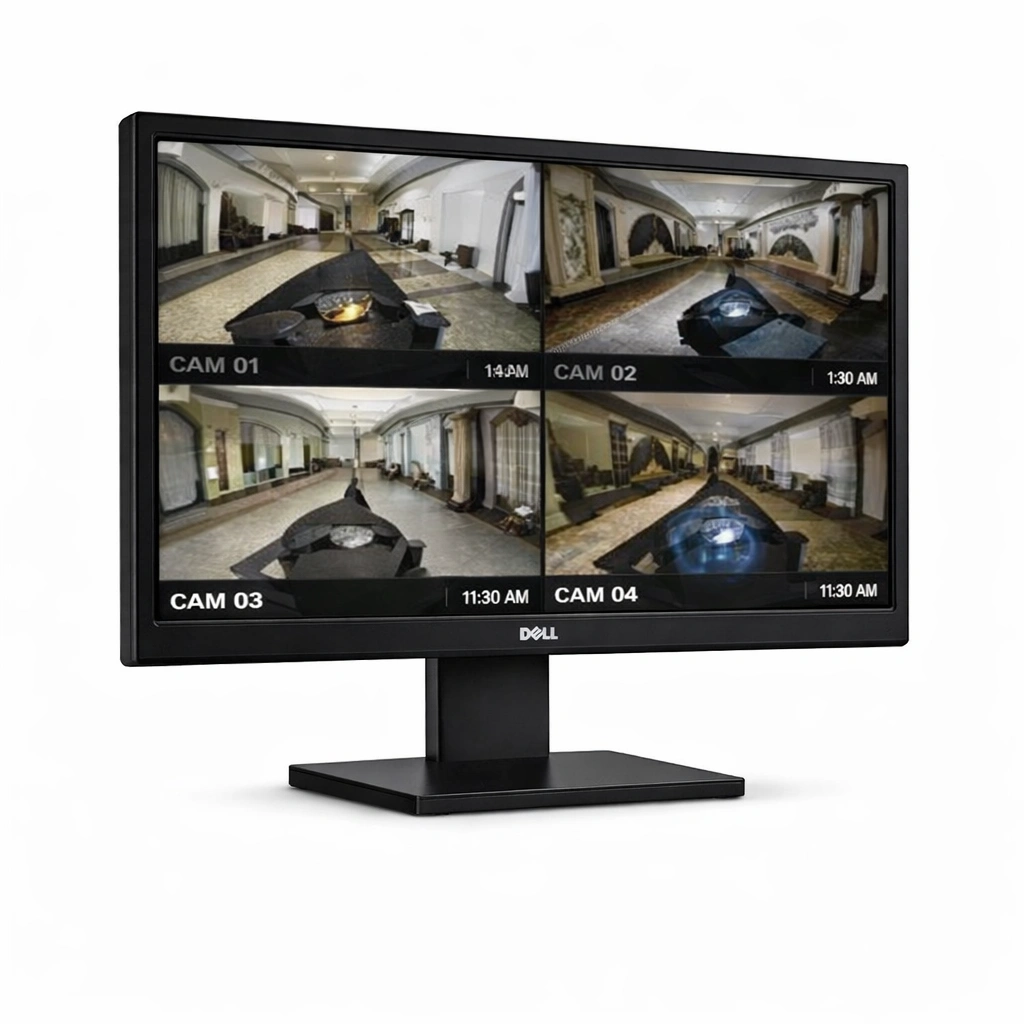
Access control systems deliver maximum security value when integrated with IP CCTV surveillance:
- Access Event-Triggered Recording: Every access control event (valid grant, denied attempt, forced door) triggers a 30-second video clip capture from the nearest camera — automatically linked in the access control event log for instant incident review.
- Failed Attempt Alerts: Three consecutive denied attempts at any door trigger immediate push notifications to the security team's mobile app with a live camera feed of the location.
- After-Hours Occupancy Detection: Motion detection alerts after the last recorded exit from a zone — identifying unauthorized overnight presence immediately.
Explore how Pinnacle secures commercial spaces under our Enterprise Surveillance & Security Solutions.
Pinnacle Infotech's Turnkey Access Control Deployment Process
- Free Site Security Survey: Our security engineers visit your facility, assess all access points, and document a zone-by-zone security architecture with hardware recommendations.
- BOQ & System Design: Complete bill of quantities with product specifications, wiring schematic, and controller placement plan.
- Installation & Commissioning: Professional installation team handling all civil work (cable laying, electromagnetic lock mounting, turnstile installation) and system programming.
- Biometric Enrollment: On-site enrollment of all employee facial templates — typically completed in 1–2 days for organizations of 50–300 employees.
- HRMS Integration Setup: API configuration and testing with your specific HRMS platform.
- Staff Training: Security team and HR training on the administration console, report generation, and emergency override procedures.
- Annual Maintenance Contract (AMC): Ongoing quarterly maintenance visits, remote monitoring, and priority 4-hour response for any system failures.
Secure Your Corporate Facility With Touchless Biometrics
Upgrade from plastic cards to high-speed AI facial recognition turnstiles and multi-door magnetic lock access. Schedule a free facility security site survey with Pinnacle Infotech.
